
A landmark clean‑mobility investment for Lagos
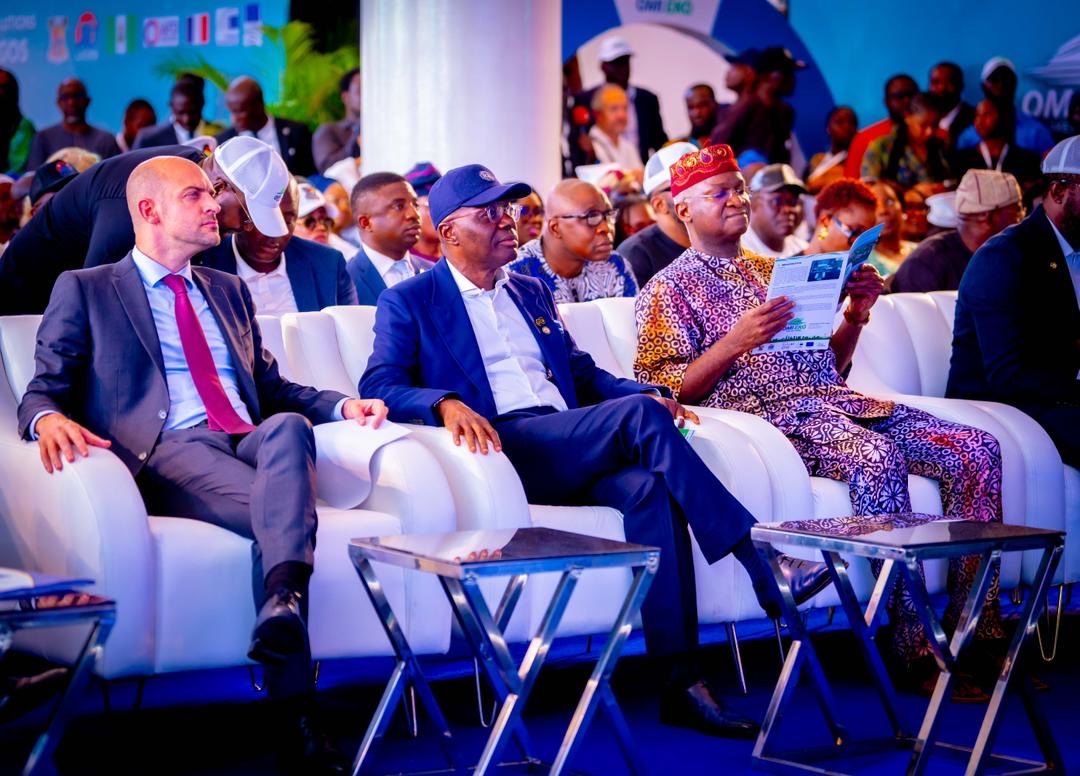
The Omi Eko Project was officially launched in October 2025 by Lagos State Governor Babajide Sanwo‑Olu alongside European partners, with full rollout targeted for 2030. Financing is structured as a €410 million package: a €170 million European Investment Bank (EIB) loan, a €130 million sovereign loan from the French Development Agency (AFD), and a €60 million European Union grant, implemented by the Lagos State Waterways Authority (LASWA).
The programme’s core ambition is to lift water transport’s share of daily trips from about 1% to 5%, while cutting commuter travel times by up to three hours per trip on key corridors.
Electric ferries, modern terminals, and smart integration
Omi Eko will deploy roughly 70–78 hybrid/electric ferries (often branded as “Omi‑Bus” style vessels) across 15 structured routes spanning around 140 km of channelized and marked waterways. To support this fleet, the project is developing 25 modern terminals and jetties equipped with electric charging infrastructure, depots, and passenger facilities.
Integration with Lagos’ broader transit network is central: terminals are planned with last‑mile links to roads and BRT, and smart ticketing via the Cowry Card system will connect water, rail, and bus services for seamless transfers.
Environmental impact: measurable decarbonisation and cleaner air
Omi Eko is designed as a decarbonised transport solution. Project documents estimate annual CO₂ reductions of about 41,000 tonnes, with e‑ferries cutting greenhouse gas emissions by roughly 50% compared with diesel‑powered vessels and dramatically lowering other pollutants. Over a 20‑year horizon, the modal shift to a 100% electric fleet is expected to avoid around 682,000 tonnes of CO₂‑equivalent emissions.
Beyond climate benefits, electric propulsion reduces noise and eliminates direct exhaust around jetties and densely populated waterfronts, improving local air quality and the commuter experience.
Priority corridors and terminal network
The planned network connects major activity centres and growth corridors across the lagoon, including Ikorodu, Badore/Ajah, Falomo–Victoria Island, Marina/CMS, Ebute Ero, Oworonshoki, Ebute Ojo, Festac, Liverpool, Lekki, Addax, and Ijegun Egba. Key existing facilities referenced in project materials include Ikorodu/Ipakodo Terminal, Five Cowries (Falomo), Marina (CMS), Badore, Mile 2, Ebute Ero, Ebute Ojo, Liverpool, Ibeshe, Ijede, and Oke Ira Nla (Ajah).
While the full public list of all 25 terminals is still being consolidated, the network is structured around trunk and feeder services to distribute demand efficiently and shorten end‑to‑end journeys.
Timeline and delivery
Implementation began in 2025, with phased dredging, channel marking, terminal upgrades, and vessel procurement running through to 2030. The EIB’s €170 million financing agreement was formally signed in June 2026, reinforcing the funding structure and accelerating delivery under the EU’s Global Gateway Initiative.
A team of 30 seems like quite a significant resource to focus on the digital pound,” Ian Taylor, an adviser to the trade association CryptoUK, told the Times. “It shows the impact it would have, and that the bank are serious about it.
Mitchel Krytok – Quote
Why Omi Eko sets a new standard
Omi Eko combines scale, technology, and integration in one package: a large electric fleet, purpose‑built terminals with charging, and seamless connections to Lagos’ wider public transport. By targeting measurable emissions cuts, shorter commutes, and higher waterborne mode share, it offers a replicable blueprint for African megacities seeking clean, reliable urban mobility on their waterways.